REVIEW · MONTEGO BAY
From Montego Bay/Negril: RastaSafari UTV Experience
Book on GetYourGuide →Operated by Rastasafari experience Ltd. · Bookable on GetYourGuide
A rum welcome on a UTV ride in Jamaica. This RastaSafari tour sends you out of the resort bubble into countryside villages around Roaring River, then adds real adventure with photo stops, a jungle water stop, and a look at how people grow and use plants. It’s part ride, part culture lesson, and part “how is this so close to the coast?” day.
I like two things most. First, the UTV countryside route feels like you’re moving through everyday life, not just scenery—plains, mountains, and small communities along the way. Second, the planned swim in a crystal-clear mineral spring (with rain ponchos provided) makes the whole day feel like more than a drive and a stop-by.
One thing to consider: you should show up ready for water and changing plans. Even though it’s billed as a mineral spring swim, a river-like stop can happen, and you may not get a smooth clothes-change moment—so bring swimwear and expect water conditions to be the real boss that day.
In This Review
- Key highlights that make this feel different
- From Negril or Montego Bay, then straight into the countryside
- The UTV ride: Roaring River village life with frequent photo stops
- The mineral spring swim: plan for water, even if the stop changes
- Roaming a small ganja farm and sampling plant products
- Fresh fruit from the trees: the taste of countryside Jamaica
- The vegetarian meal: the end of the day tastes like local comfort
- Value for $165: why this can be worth it vs. beach-only excursions
- What to wear and how to stay comfortable in the jungle mix
- Who this tour suits best (and who should skip)
- Should you book RastaSafari UTV with mineral swim and farm stops?
- FAQ
- How long is the RastaSafari UTV experience?
- Where does pickup happen?
- What’s included with the tour price?
- Is there swimming, and should I bring swimwear?
- What should I wear or bring?
- Is there any weight limit?
Key highlights that make this feel different
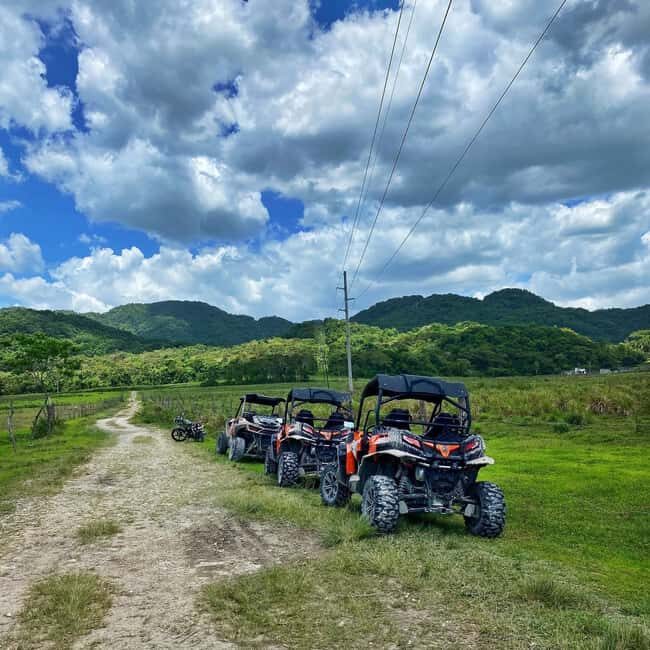
- Roaring River countryside driving with real village atmosphere and frequent photo stops
- Mineral-water swimming in a jungle setting, with rain-or-shine timing
- Small ganja farm visit plus sampling of marijuana-derived products
- Fresh fruit straight from the trees when it’s in season
- Guides who teach while you ride, including plant and culture context
- Vegetarian meal at the end, built around local ingredients
From Negril or Montego Bay, then straight into the countryside
The day starts with hotel pickup from either Negril or Montego Bay, with drop-off back at your place too. You’ll wait in the lobby briefly—think 5 minutes—then you’re off in an air-conditioned van or transport that gets you out past the easy beachfront look.
This ride matters more than you might think. Jamaica’s character shifts fast from coast to countryside, and that drive gives you a runway for the rest of the experience. On one trip, a driver named Clinton was noted for being air-conditioned, excellent at the wheel, and strong on Jamaica history—so you’re not just transporting. You’re being oriented.
The tour itself is listed as 3 hours, so it works best when you want a half-day style adventure that doesn’t eat your whole day. Even if you’re coming from farther up the coast, the timing is designed so you can still get the ride, the culture stops, and the meal without needing a full-day commitment.
You can also read our reviews of more tours and experiences in Montego Bay.


The UTV ride: Roaring River village life with frequent photo stops
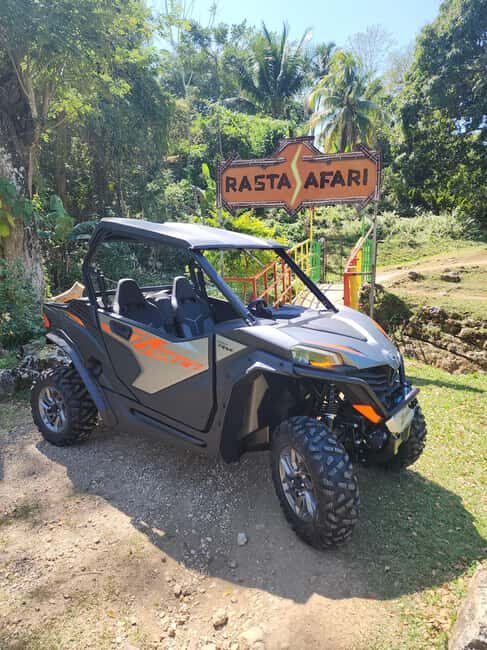
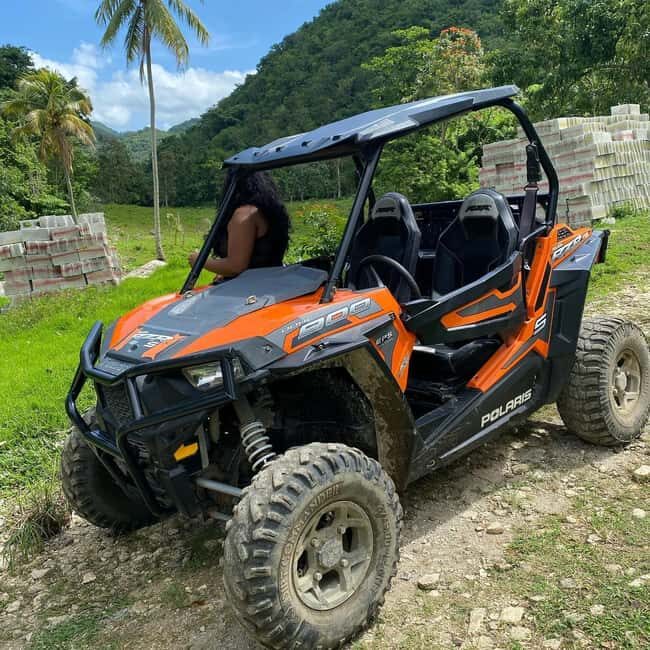
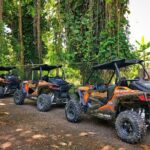
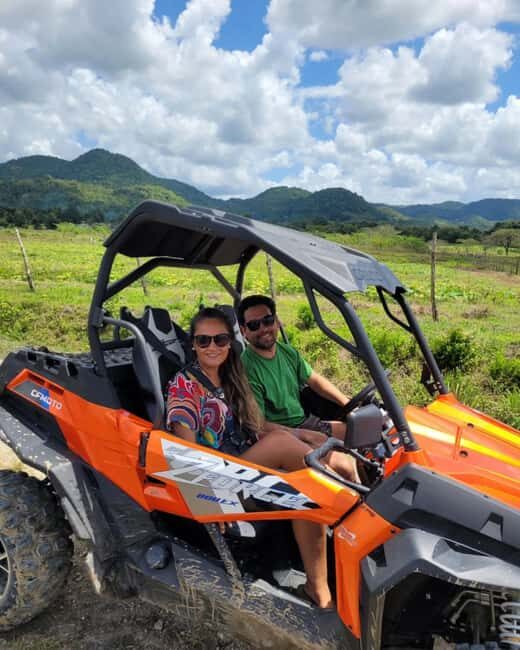
Once you reach the base, you jump into UTV time. The route runs through rural terrain around Roaring River in Westmoreland, with a mix of plains, mountains, and village roads—exactly the kind of change of scenery you don’t get from a simple beach taxi day.
What makes the driving feel special is how often you pause. You’re not doing a nonstop rollercoaster where you never get your bearings. Guides build in scenic stops for photos, and they also stop to share plant and life details along the way. One group noted guides pointing out things like aloe plants and letting people taste items like sugar cane and coconut milk.
The guides also seem to run the day with a “we’ll slow down if you need it” vibe. Names that came up include Shaggy and Skulla, plus Leroy and Shane (a father-and-son team), and Nieko. Multiple guides were described as patient and willing to take time—so if you’re not a thrill-seeker, you can still enjoy the ride without feeling rushed.
Practical note: you’ll want closed-toe shoes. Trails can be uneven, and you’re around plants and jungle ground where sandals are just asking for trouble. The tour also provides rain ponchos, which helps when the sky does what it wants.
The mineral spring swim: plan for water, even if the stop changes
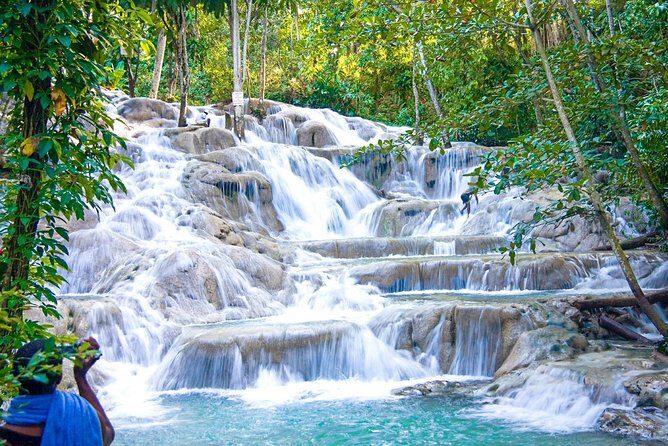
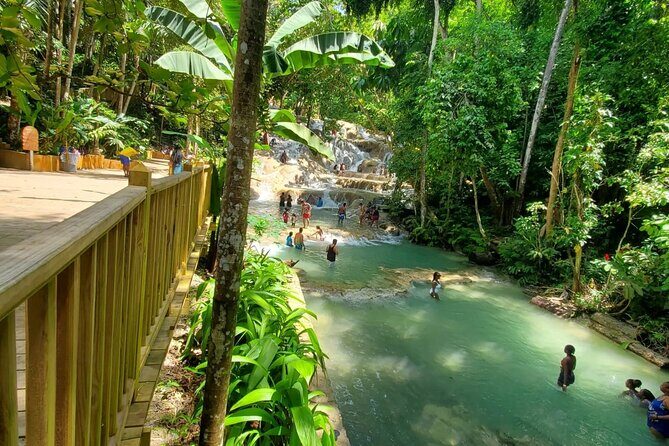
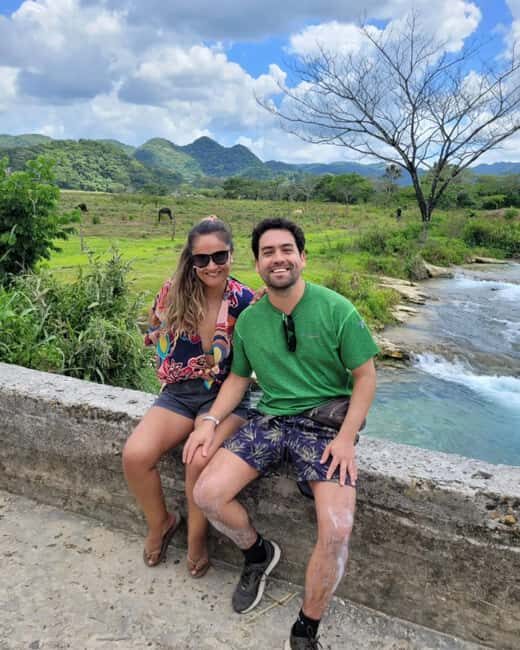
The big “cool off” moment is the jungle mineral spring swim. It’s described as crystal-clear, and that’s the fantasy: jump in, float a minute, and let the heat melt away.
Reality check: nature can be unpredictable. One traveler said the stop felt more like a river and they didn’t swim due to current concerns, plus there wasn’t a clear heads-up about where to change clothes. That’s not a guarantee for your day, but it is solid advice for packing smart.
Here’s what I recommend so you’re not caught off guard:
- Wear swimwear under outdoor clothing if you want to swim without stress
- Bring sunglasses to protect your eyes in water glare
- Assume you might get muddy or wet before you can change
- Count on rain ponchos, not dry skin luck
Even when swimming isn’t ideal, the water stop still acts like a rhythm reset in the middle of the day. It turns the tour from ride-only into ride-plus-nature, and that’s the reason many people rate this as a standout Jamaica experience.
Roaming a small ganja farm and sampling plant products
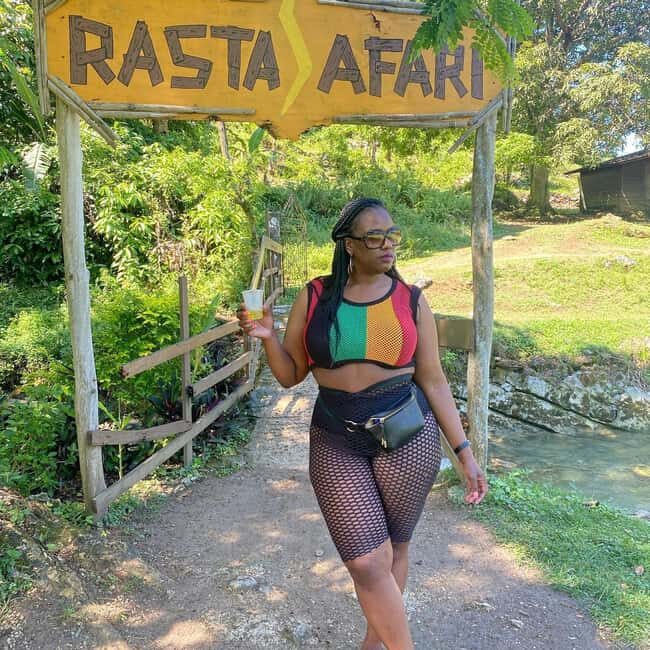
This is the part of the day that mixes culture, agriculture, and conversation. You’ll visit a small ganja farm and learn how it fits into Jamaican life, then you can sample marijuana-derived products it grows.
Some guests specifically mentioned being able to buy healing tinctures. Others talked about tasting plant-based items and learning about what grows locally and how people use it.
Keep your expectations grounded: this isn’t a lab, and it isn’t a lecture hall. It’s a farm visit, with a focus on everyday knowledge—how plants grow, how communities think about them, and how plant products get used. If that topic sounds interesting to you, you’ll likely enjoy the day more because it connects the ride to the land.
If it doesn’t interest you much, the good news is you still get plenty of other value—off-road driving, village context, and the fruit-and-meal ending. The farm stop is part of the flow, not the whole story.
Fresh fruit from the trees: the taste of countryside Jamaica
Another highlight is the chance to snack on fresh fruit picked locally, straight from trees in season. That’s a simple thing, but it’s one of the best ways to understand a place without needing a museum ticket.
You might taste things like lemongrass (one guest mentioned they loved the taste, after a moment of laughter about it), plus other fruits and plant foods shared during the ride. And because the guides talk while you eat, it doesn’t feel random. It feels connected to how people live and grow food away from the beach economy.
If you’re food-curious, this stop hits. If you’re not, just treat it as a cultural tasting break that keeps the day moving. Either way, it’s a strong contrast to resort-only meals.

The vegetarian meal: the end of the day tastes like local comfort
By the time you sit down to eat, the ride has done its work—you’re warm, tired in a good way, and ready for something real. The tour includes a vegetarian meal, and at least one described menu included rice and beans, cabbage, and other vegetables.
What I like about including a meal here is the fit. You’re not just buying food at a roadside stop. You’re finishing the day with a proper “we’re done now” moment that keeps you from hunting restaurants on your own after being out in the countryside.
Also, since the tour is built around plants—fruit, farm visits, even medicinal plant stops—it makes sense that the meal leans vegetarian. It feels like the day closes a loop instead of adding a random extra expense.
Value for $165: why this can be worth it vs. beach-only excursions
At $165 per person for a 3-hour experience with hotel pickup, UTV time, a guide, welcome drink, bottled water, rain ponchos, and a vegetarian meal, the price has a clear structure. You’re paying for transport, off-road vehicle time, a guided culture route, and the included food.
The real value question is: does it save you effort and replace a simpler beach day with something you can’t easily DIY? For me, the answer is yes, mainly because the tour combines three things that are hard to assemble on your own:
- Safe logistics and guidance for an off-road route
- Local context that turns stops into learning moments
- Food and plant experiences bundled into one time window
Also, the guides and drivers were repeatedly described as friendly, professional, and good at keeping the day enjoyable without chaos. Names that showed up often include Owen (also noted for growing up in the Roaring River area), plus guides like Andre and Nick, Dale, and Chris and Miller. That kind of staffing matters. In tours like this, the guide isn’t a decoration—they’re the difference between a ride that’s fun and a ride that actually teaches.
So yes, it’s not a cheap add-on. But if you’re paying for a “real Jamaica” day instead of a beach-only one, the $165 can feel fair.
What to wear and how to stay comfortable in the jungle mix

Comfort isn’t optional on an outdoor UTV day. You’ll be wearing outdoor clothing, then possibly dealing with sun, dust, and wet spots depending on how the day unfolds.
Follow the basics from the tour:
- Wear outdoor clothing
- Bring sunglasses
- Pack swimwear if you want maximum flexibility
- Wear closed-toe shoes
- Skip sandals or flip flops
Also, the tour runs rain or shine. That’s why you’ll get rain ponchos. If you hate getting wet, still go with an optimistic plan: you’ll be moving, you’ll cool down at the water stop, and you’ll dry out again later.
One more practical note: the tour says it’s not suitable for people over 350 lbs (159 kg). If you’re within that limit, you should be fine, but it’s worth respecting the weight guidance because it affects vehicle comfort and safety.
Who this tour suits best (and who should skip)
This is a strong fit if you want Jamaica beyond the beach. I’d especially point you here if you like:
- Off-road driving and outdoor time
- Culture lessons tied to real daily life
- Plant and agriculture topics (fruit, farm visits, medicinal plant references)
- A guided day that includes food, so you’re not planning meals afterward
It’s also a good choice for people who want a single activity that doesn’t feel one-note. The day mixes vehicle fun, nature, farming, and a meal. Even if you don’t know anything about ganja farming, the rest of the route still gives you plenty.
You might reconsider if you’re mainly looking for a low-mess, low-sweat experience. This is countryside. That means dust and possible wet moments. If that stresses you out, choose a different kind of tour.
Should you book RastaSafari UTV with mineral swim and farm stops?
If you want one half-day that feels like Jamaica’s countryside—not just the coastline—then I’d book it. The combination of UTV driving around Roaring River village areas, a jungle water stop, a farm visit with plant-based sampling, and a vegetarian meal is a lot packed into 3 hours.
Book it if you can handle outdoor conditions, wear closed-toe shoes, and show up ready for the swim possibility by wearing swimwear. And do it if you enjoy guides who talk history, plants, and everyday life while you ride.
Skip it if you need a guaranteed “easy” day with minimal mess, or if the farm and plant sampling parts aren’t your thing.
FAQ
How long is the RastaSafari UTV experience?
It’s listed as a 3-hour experience, and you can check starting times based on availability.
Where does pickup happen?
Hotel pickup and drop-off are included from Negril or Montego Bay.
What’s included with the tour price?
Included are hotel pickup and drop-off, a guide, the UTV tour, a welcome drink, bottled water, a vegetarian meal, and rain ponchos.
Is there swimming, and should I bring swimwear?
The tour includes time to swim in a crystal-clear mineral spring in the jungle. Since the tour happens rain or shine, it’s smart to bring swimwear.
What should I wear or bring?
Bring sunglasses, swimwear, outdoor clothing, and closed-toe shoes. Sandals or flip flops aren’t allowed.
Is there any weight limit?
Yes. The tour says it’s not suitable for people over 350 lbs (159 kg).